How to Build a LinkedIn Profile That Gets Recruiters' Attention
By Dawn Bowman
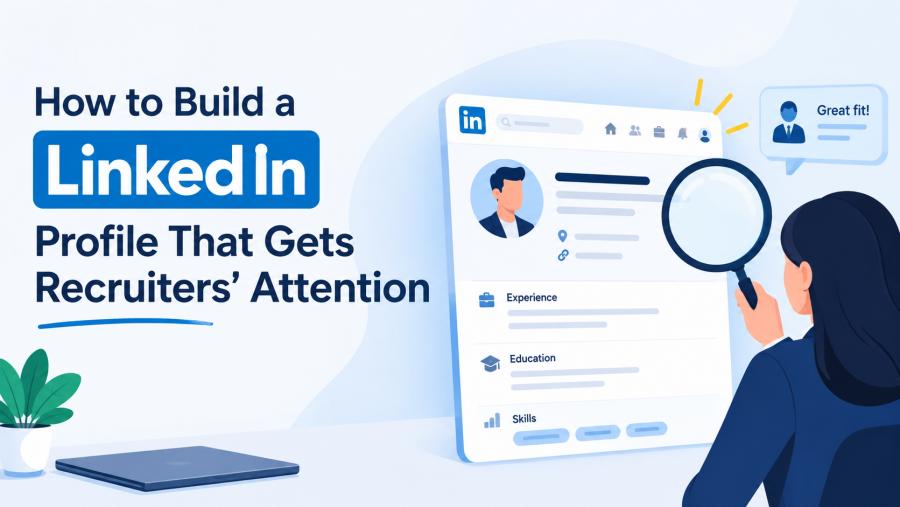
LinkedIn has more than 1.2 billion members. That's a staggering number, and it means your profile is competing against a lot of noise. According to LinkedIn's own data, users with complete profiles are 40 times more likely to receive opportunities through the platform. That's an enormous edge, and most users are leaving it on the table.
Most people treat their LinkedIn profile like a dusty resume they uploaded once and forgot about. A few bullet points from their last job, a vague headline, maybe a photo from a wedding they cropped down. And then they wonder why recruiters aren't reaching out.
A strong LinkedIn profile doesn't require a massive time investment. But it does requires being intentional about a handful of things most people skip or do halfway. Here's what to focus on.
Start With a Professional-Looking Photo
This matters more than you might think. LinkedIn's data shows that profiles with a photo receive 21 times more views and 36 times more messages than profiles without one. Recruiters scroll fast, and a missing photo or a blurry selfie is an easy reason to keep scrolling.
You don't need to spend hundreds of dollars on a professional photographer. A well-lit photo taken on a smartphone can work if the framing and background are clean. Aim for a headshot from the shoulders up, with your face filling most of the frame. Good natural lighting makes a bigger difference than an expensive camera.
One common problem is a cluttered or distracting background. If your best photo has a messy kitchen or a crowded bar behind you, a background remover can strip all of that out and replace it with a clean, solid-color backdrop. It's a quick fix that can take an otherwise decent photo and make it look polished.
Write a Headline That Does More Than State Your Job Title
Your headline is one of the first things recruiters see, and LinkedIn gives you 220 characters to work with. Most people waste this space by letting it default to their current job title. "Marketing Manager at XYZ Corp" tells a recruiter almost nothing about what you actually do or what you're good at.
A better approach is to describe what you do and the value you bring. Something like "Marketing Manager | B2B SaaS Growth, Demand Gen, Content Strategy" gives a recruiter a much clearer picture and also helps you show up in more searches. Think about the keywords a recruiter would type when looking for someone with your skill set, and work those into the headline naturally.
Make the About Section Actually Worth Reading
A lot of LinkedIn About sections read like a copy-paste from a cover letter template. Generic statements about being a "motivated professional" or a "team player with a passion for results" don't tell a recruiter anything useful.
Instead, use this section to give a concise overview of your experience, what you specialize in, and what types of roles you're interested in. Write it in a conversational tone. Include specific accomplishments where you can. "Grew organic traffic by 150% over 18 months" is memorable. "Experienced in SEO" is not. Recruiters are looking for evidence that you can do the work, and concrete numbers help you stand out.
Keep it to two or three short paragraphs. Nobody wants to scroll through a wall of text.
Add at Least Five Relevant Skills
LinkedIn's skills section does double duty. It tells recruiters what you're proficient in, and it also feeds the platform's search algorithm. When a recruiter searches for "data analysis" or "project management," LinkedIn pulls from the skills listed on profiles to generate results. Profiles with five or more skills listed get contacted by recruiters up to 33 times more often, according to LinkedIn.
Be strategic about which skills you add. Lead with the ones most relevant to the types of roles you're targeting, because LinkedIn lets you pin your top skills. And if colleagues or former managers are willing to endorse you for those skills, even better. Endorsements add credibility and can bump your profile higher in search results.
Fill Out Your Work Experience With Real Detail
Too many LinkedIn profiles list job titles and date ranges with no additional context. A recruiter looking at your profile wants to understand what you actually did at each company and what you accomplished while you were there.
For each role, write a short paragraph or a few bullet points that describe your responsibilities and, more importantly, your results. Did you manage a team? How many people? Did you launch a product or complete a major project? What was the outcome? These are the details that separate a profile a recruiter will engage with from one they'll skim past.
You don't need to include every job you've ever had. Focus on the roles that are most relevant to where you want to go next.
Customize Your Profile URL
By default, LinkedIn assigns you a profile URL with a bunch of random numbers at the end. It looks sloppy on a resume or in an email signature. Go to your profile settings and change it to your name or a close variation of it. Something like linkedin.com/in/janedoe is clean, memorable, and professional. This takes about 30 seconds and signals that you've put thought into how you present yourself.
Stay Active on the Platform
A profile that hasn't been updated in two years tells recruiters something, and nothing good. LinkedIn's algorithm also favors profiles that show recent activity, which means active users are more likely to appear in search results.
You don't need to post daily thought leadership essays. Commenting on other people's posts, sharing an article relevant to your field, or reacting to industry news all count as engagement. Even updating your profile periodically with new skills or project details signals to the algorithm that your profile is current.
If you're actively looking for work, LinkedIn's Open to Work feature is worth turning on. You can set it so that only recruiters see the signal, keeping it invisible to your current employer. According to LinkedIn, users who enable this feature receive up to 40% more InMail messages from recruiters.
Ask for Recommendations
Skill endorsements are helpful, but written recommendations carry more weight. A recommendation from a former manager or colleague gives a recruiter third-party validation of what you're claiming on your profile. It adds a human element that bullet points and skill badges can't replicate.
Reach out to people you've worked closely with and ask if they'd be willing to write a brief recommendation. Make it easier by suggesting they focus on a specific project or accomplishment. Most people are happy to help if you've done good work together.
Putting It All Together
None of these changes are difficult on their own. The problem is that most people do one or two and leave the rest unfinished. A great photo with an empty About section won't get the job done. A detailed work history with a default headline and no skills listed won't either.
Set aside an hour, work through each section, and get your profile to a point where it accurately represents who you are and what you can do. A complete, well-optimized profile genuinely increases the chances that the right recruiter finds you at the right time. And in a job market where most of the competition is running on autopilot, that puts you in a strong position.
Back to Recruitment blogs