How To Write a Social Media Fundraising Strategy for Your Nonprofit
By Dawn Bowman

Social media is a fantastic channel for getting the word out. But the problem is … you’re constantly competing for attention, which makes it tough to figure out how to turn social media into real donations.
Without a clear plan, your posts can feel scattered and aimless, which makes them easy to ignore. This leads to missed opportunities and slower growth.
Thankfully, with a structured approach, you can connect your content to real outcomes. This guides donors through a clear path so that they can convert quickly.
Let’s take a closer look at how to build a nonprofit social media fundraising strategy that drives results.
Before we break it down step by step, here are the key takeaways:
HIGHLIGHTS
- Social media can help turn passive followers into active donors.
- A clear content strategy improves engagement rates and trust.
- The right platform and fundraising tools increase conversions.
- A consistent posting schedule creates trust and visibility.
- Tracking analytics turns effort into measurable growth.
WHY IS SOCIAL MEDIA IMPORTANT FOR NONPROFIT FUNDRAISING STRATEGIES
Fundraising has shifted, with people now using social media apps like Facebook to discover causes, evaluate trust, and decide whether to donate. This is because social platforms make it easy to show what your cause stands for while removing friction from the giving process.
Here’s why nonprofits need to show up on social media:
IT MEETS DONORS WHERE THEY ALREADY ARE
According to Statista, people spend over two hours a day on social media. This gives your nonprofit a constant chance to show up in their feeds.
More importantly, social users are active and generous donors.
According to Give.org’s 2024 Donor Trust Report, social media appeals are among the most commonly used donation channels. The Blackbaud Institute’s 2024 Trends in Giving Report also found that online giving grew 2.2% in 2024, with an average online gift of $197. 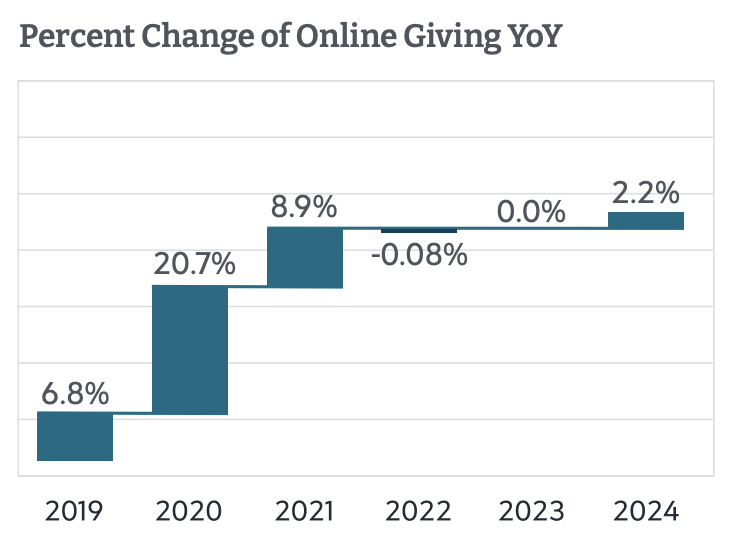
Image via Blackbaud
Percentage Change of Online Giving from 2019 to 2024
This shows that with the right strategy, you can turn social media attention into a core fundraising channel.
IT LOWERS THE BARRIER TO GIVING
Social media has the perfect tools for friction-free giving.
Built-in donation buttons, Facebook’s donation features, and tools like the donation sticker make giving immediate.
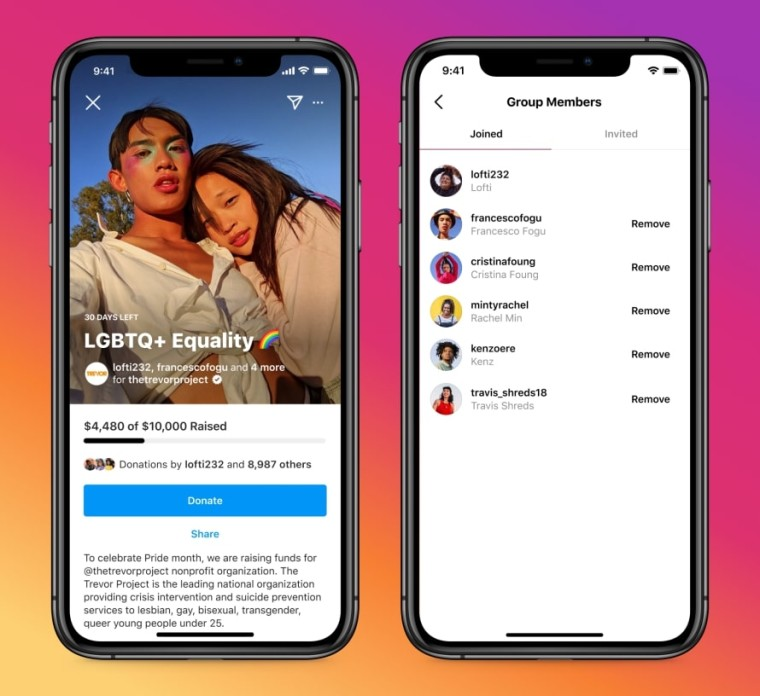
Image via Neowin
Meta Donation Features
People can act the moment they feel connected to a cause, making it ideal for micro-donations and real-time decision-making.
IT BUILDS TRUST THROUGH CONSISTENT VISIBILITY
People trust nonprofits when they see consistent proof of your impact. As Give.org’s 2024 report found, shared accomplishments are the most important trust signal for donors.
Social media lets you show your work as it happens, through photos, videos, impact updates, and real stories from your community.
This builds trust by showing potential donors where their money goes.
Now that you understand why social media plays such a critical role in nonprofit fundraising, the next step is building a strategy that turns that visibility into consistent donations.
HOW TO WRITE A NONPROFIT SOCIAL MEDIA FUNDRAISING STRATEGY
A strong nonprofit social media strategy gives your team structure. Every post has a purpose that moves someone closer to donating.
Without that structure, content feels reactive, and results are hard to measure.
Here’s how to plan a strategic social media fundraising strategy:
STEP 1: SET CLEAR SOCIAL MEDIA GOALS
Start by deciding what success looks like so your social media efforts stay focused.
To do this, define quantifiable outcomes like:
- Increase fundraising revenue by X%
- Double volunteer signups
- 10x engagement rates
Tie your outcomes to a specific action that social users can take, such as a donate, share, or sign-up button.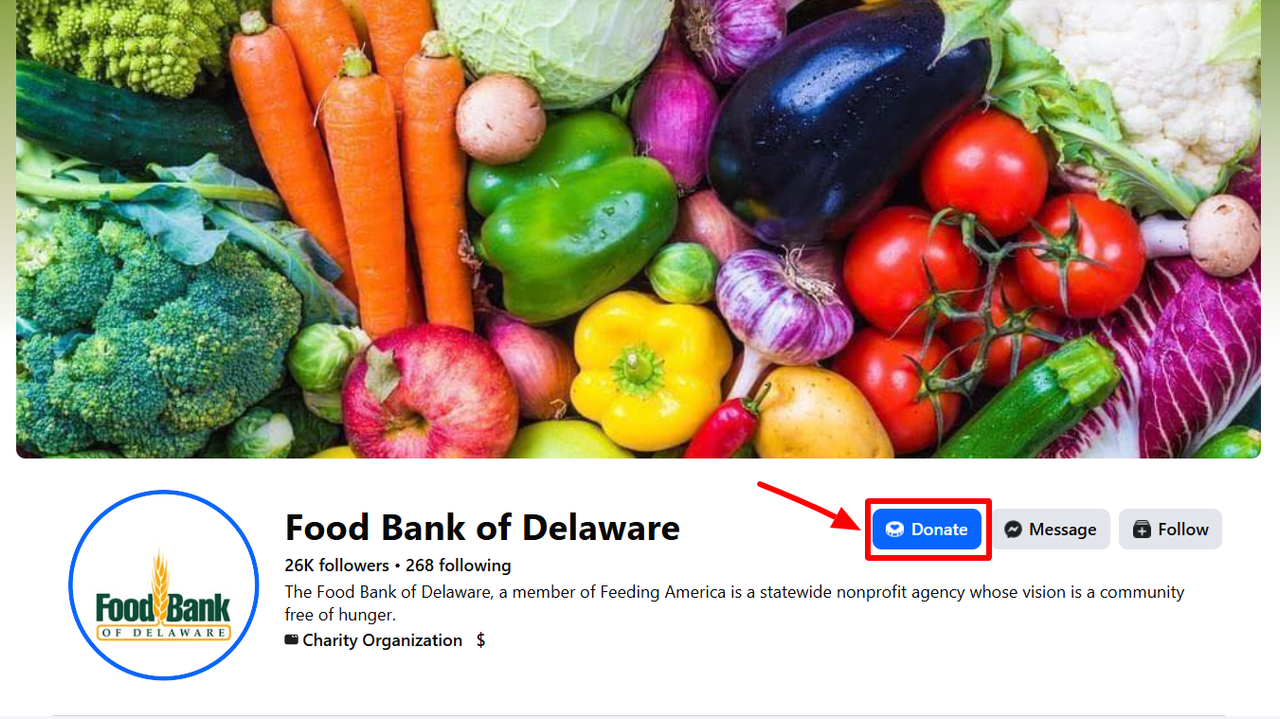
Image via Food Bank of Delaware
Food Bank of Delaware Facebook Page
STEP 2: DEFINE YOUR DONOR PERSONAS
Know your audience so your content actually lands with the right people.
Use your current donor database to identify patterns and behaviors of those who give most often and most generously. Build audience lists based on the same motivations and interests.
From there, map how each group moves through your donor pipeline, from initial discovery to donation.
STEP 3: CHOOSE THE RIGHT SOCIAL MEDIA PLATFORMS
Use your donor personas to work out where your audience already spends their time. Focus on these platforms to avoid spreading your efforts too thin.
Craft content that works with each platform’s strengths. For example, long-form content works better on YouTube, whereas short videos work better on TikTok and Instagram.
STEP 4: BUILD A CONTENT STRATEGY THAT DRIVES ACTION
An enterprise SEO agency can help you create content that moves people through the pipeline, from awareness through loyalty.
Here’s how that looks in practice:
- Build awareness with short-form videos and real-time updates that show your work as it happens.
- Foster trust with community testimonials, progress updates, and clear proof that shows your impact.
- Drive action with direct donation appeals, visible volunteer opportunities, and occasional incentive-based campaigns. For example, you could partner with local businesses to offer a gift card program in exchange for donations, giving people an extra reason to act.
- Encourage loyalty by continuing to share updates, celebrate supporters, and show the ongoing results of their contributions.
You can find more valuable information on the SEOpowerplays newsletter to move the needle further.
STEP 5: CREATE A SOCIAL CONTENT CALENDAR
Plan to stay consistent and visible.
Build a social content calendar with a mix of content. Balance fundraising campaigns, awareness posts, and community updates.
Plan your content around key moments, like Giving Tuesday and seasonal events.
STEP 6: USE THE RIGHT TOOLS TO SCALE YOUR EFFORTS
Choose tools that help you stay consistent without adding extra manual work.
For example: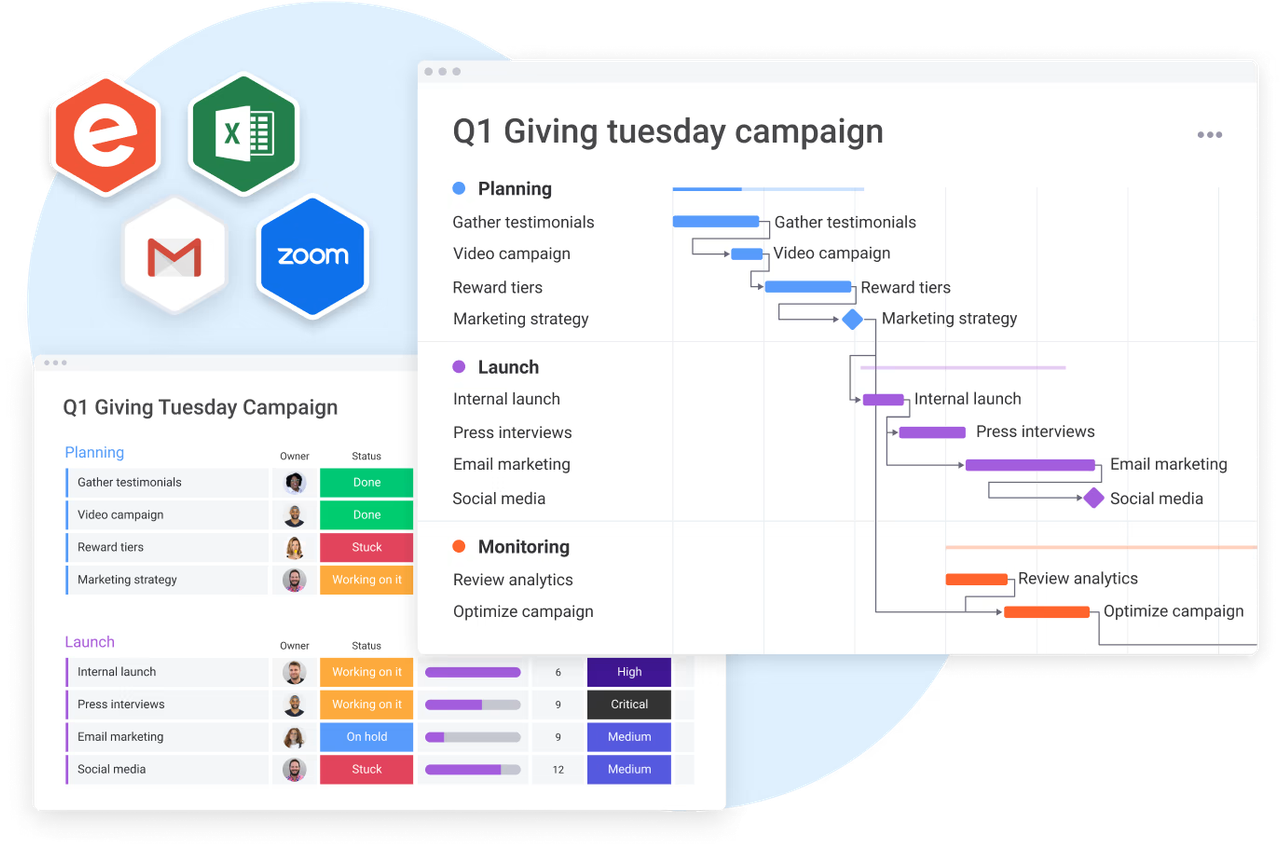
Image via Monday.com
Monday.com Nonprofit Campaign Manager
Here are some of the most useful tools:
- Social listening tools to track what people are talking about and what's gaining traction.
- AI writing tools and video editing software to speed up the production process.
- Social media management platforms for scheduling and managing posts.
- Analytics tools to track results.
As your fundraising setup becomes more complex, keeping these tools connected can help donor information and campaign results move between social platforms, donation tools, your CRM, email marketing, and analytics instead of remaining in separate systems.
STEP 7: TRACK, TEST, AND IMPROVE PERFORMANCE
Use data to identify what performs best and adjust your content plan accordingly:
- Monitor social media analytics and engagement rates.
- Use social listening to see where you’re mentioned.
- Track conversions using tools like Meta Pixel.
Then apply the patterns you see to new tests and continue optimizing based on real results.
WRAP UP
A strong nonprofit social media strategy helps you turn attention into action, and action into lasting support.
Remember to:
- Show up consistently so people can see and trust your work.
- Create content that moves from awareness to action.
- Make giving simple, clear, and rewarding.
- Track what works and improve over time.
With these fundamentals in place, you’ll be better positioned to turn social engagement into real fundraising results.
If you need help building a strategy to drive donations, book a call with Social Hire for expert support tailored to your nonprofit.
FAQS
What is a nonprofit social media strategy?
A nonprofit social media strategy is a plan for using social media to raise awareness, build trust, and drive donations through consistent, goal-driven content.
Which social platforms are best for fundraising?
It depends on your audience and goals. Facebook works well for donations, Instagram for storytelling, and TikTok for reach. Focus on what you want to achieve and where your supporters are most active.
How often should nonprofits post on social media?
Consistency matters more than frequency. Aim for a realistic schedule using a content calendar, so your audience sees regular updates without gaps.
Back to Small Business blogs